August 1940 test
Major W.S. Wise commanded the Unit, Capt. Bennett was the
Second-in-Command and the Subalterns were Moore, I.D.S.
Browne, Tomkinson and one other. Greenall joined shortly
afterwards.
The General Background
It was a regular Coy., with a large proportion of Reservists,
supplemented with the new intake from Elgin R.E. Training
Depot, largely Scottish. Our time was spent in reforming and
training new intakes, re-equipping and carrying out such jobs as
building tank detraining sidings, preparing potential Air
Landing Grounds against paratroops and gliders. Browne, Moore
and one other Lieutenant then left the Coy., and Major Wise
commenced training his Subalterns, which involved an intake of
over twenty officers before the Unit mobilised at Caterham in
Jan. 1942.
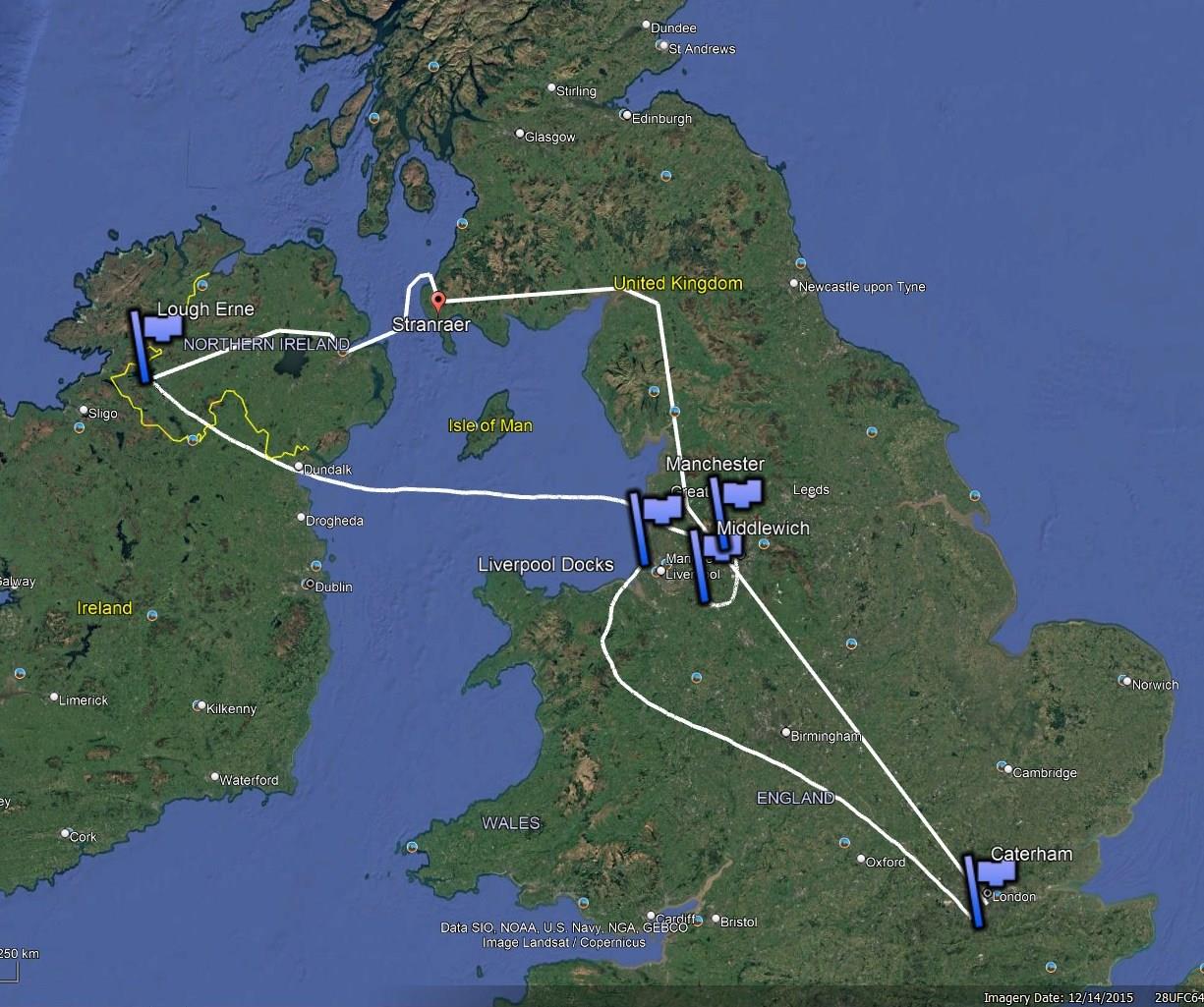
In Oct. 1940, the Unit moved to Middlewich and until Dec 23rd
1940 the time was spent in Unit and Brigade training, which
included such tasks as F.B.E. bridges over various canals in the
neighbourhood, the demolition in theory of the innumerable
bridges in the area and the resulting post-mortems on the jobs.
This was enlivened by the preparation of a squad for the local
War Weapons Week which resulted in the Sgt. Major and the
Officer-in-Charge being harangued by the motherly ladies of the
Middlewich as bullies, nazi-tyrants etc., etc. The
Second-in-Command, Capt. Bennett now left and was
succeeded by Capt. Arthur, whose first task was a brigade
scheme in which we had to put a F.B.E. bridge over a river
which involved an approach and exit through a flood bank and
across a field, which was very wet (with a farmer standing by
complete with a claim form), the building of the bridge and
ensuring that it was capable of forming out at a moment’s notice
to let the engine-driven barges pass. This was only just
achieved in time to allow an elderly bargee "lady" to navigate
through in the early morning and by the time she'd passed, we
knew what language was! At that time, we saw such faces as the
Battalion Commander covering our bridging operation, the
Brigade Commander Umpire and spectators, all showing their
various disapprovals and/or approvals as they took in the many
snags there are in building bridges even in such a small one.
December 1940 Manchester. On Dec. 22/23, we were moved to
Manchester at a moment's notice to help the civil authorities
cope with the bombing and carried out such tasks as clearing
fire gaps, demolition of unsafe buildings mainly in Portland St.,
where most of them were constructed of Portland Stone face,
backed up with brickwork. This ensured full use of all our
equipment
and we
obtained
excellent
practical
training with
compressors,
explosives
etc., and most
of all it
brought out
the team spirit
in the
Platoons and Company and gave us all, one more an idea of the
other side of war. Co-operation with the Civil Authorities was
excellent and I think No. 3 Platoon held for many years the coils
of wire indented on the civil authorities as cable exploder, of the
necessary resistance etc., which was not in actual fact the right
material, it must have cost £'s to buy at that time. A report of
our work was handed to the C.R.E., Lt. Col. R.E. Wood, R.E. and
I believe it eventually found its way into one of the Institute
Royal Engineers' Quarterly Magazines, the Company did not
receive any payment for this article!!
Mar./Apr. 1941
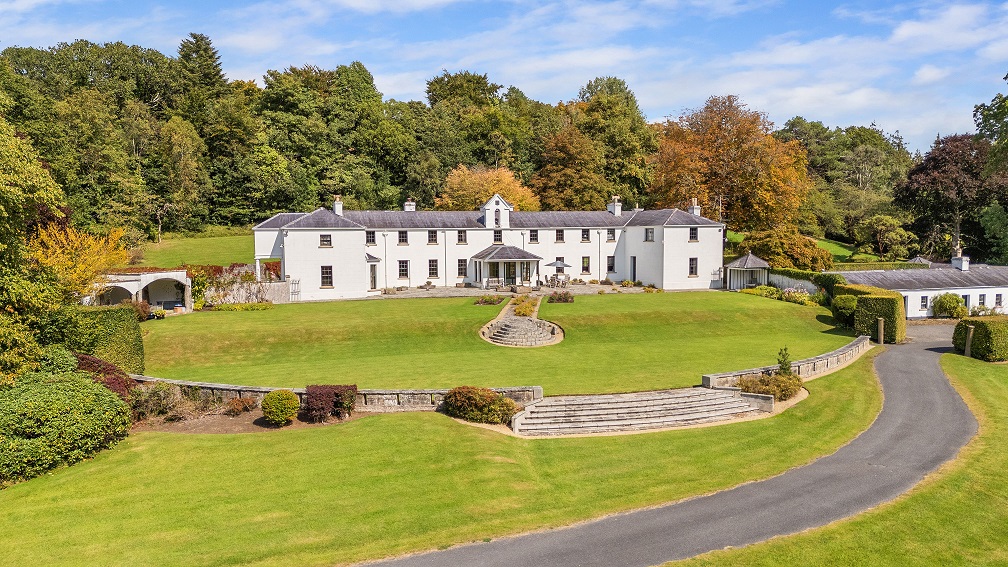
The Unit moved to Northern Ireland and was stationed at Lord
Ely's Lodge on the Banks of Lough Erne - beautiful countryside,
reasonable quarters, Nissen Huts, studded along the drive up to
the Lodge and along the Lakeside. The move showed us how
much we still needed to learn. We set to on the narrow Irish
Roads, excellent training in de-ditching and the making of
approach roads over soft ground, roads and bridges to the Free
State Border were recced and bridges not known or marked off
as the strongest concrete were found - all had to be prepared for
demolition, in theory, and a full record made in case of need.
Liaison with the North Irish Constabulary and the Northern
Ireland Home Guard was instituted and instructors were lent to
them. This was very popular as the Home Guard always had a
good meeting at the local afterwards. Memorable moments whilst
training the North Irish Constabulary was in preparing a house
with booby-traps; one of the traps was a first aid box which had
been put into position, whilst the Corporal in Charge was fixing
the final trap it exploded and cut his finger, blood flowed and
the Sapper with him rushed to the first aid box, unfortunately
he chose the wrong box and that exploded too and so a hurried
halt was called to his movements so that no further traps would
be exploded and ruin several days hard work.
Many other similar jobs were carried out with improvised
methods for halting tanks, foogases - delayed explosions in
main roads, petrol traps etc., and demonstrations were given to
the Battalions in the Brigade, and afterwards the Battalion
Personnel were always given an opportunity of going through
specially prepared booby-trapped buildings - woods etc., so that
they would have some idea of potential dangers in the future.
This inevitably led them to have far too great a respect for us
and in the end, we were like pariahs, no one visited us and the
few people who did visit invariably got us to open the doors of
their vehicles before going! Metal and woodworking shops were
set up and the Unit fitted up all their workshops, LAD and other
Lorries with the necessary bins, racks, boxes, so that all the
equipment could be safely packed away and leave the maximum
room for the troops as well. The timber came from fallen trees
on Lord Ely's Estate which were given to us by the Estate Agent
and I regret to say that one or two standing trees as well had to
be removed in order to complete the job. As we had a lake to
play on, watermanship received a good deal of attention and we
made full use of the folding boat and assault equipment, motor
launches and the odd sailing boat that we acquired from around
and about.
After the usual unit schemes, the Brigade Schemes became
more and more frequent. These entailed rapid moves across
Northern Ireland, construction of F.B.E. and Pontoon Bridges
across the many wide rivers and the preparation of approach
roads and exits and temporary roads across fields. The
termination of one exercise involved the construction of a 280 ft.
Pontoon Bridge across the river Blackwater and after working
for many hours and finishing five minutes before the appointed
hour a figure, very nattily attired, appeared through the morning
mist, Brig. Coxwell Rogers, who walked over the bridge asked
us if it was ready and on being informed it was, looked at his
watch and said "H'm! only just", and then marched away. This
was poor praise for the excellent work that had been put in over
the previous two or three days including a night's work before
the final completion of the bridge! Liaison was established with
the Fleet Air Arm and R.A.F. who both operated from the
neighbourhood. The Fleet Air Arm had Catalina Flying Boats
and we had one or two trips in them, but in the end decided that
firm ground was the best place. We built a certain number of
gun emplacements around the aerodrome for their protection
but these were mainly done by one of the other Field Co.'s. We
practiced the usual brigade waterpoints and all aspects of
Engineer Training during the months in Ireland. No sooner were
we really settled in Ely Lodge than the usual order came to move
and we went down the Lake to the Upper Lough and took over a
new camp partially completed on Belle Island and this of course
we had to complete together with a considerable number of
other camps for the battalions in our brigade who were in camp
within an area of 30 miles. In this way we got to know our units
extremely well and this was of inestimable value later although
at times I do not think the battalions who supplied the working
parties thought so.
It was always said that that the smartest sappers that ever
appeared in the Unit were those that came back from the
Battalion Police Sergeants after serving their fourteen days'
detention, one had but to raise one's voice to these sappers and
they instantly sprang to attention or marched smartly towards
you in a way that was almost unbecoming in a real sapper!
although I feel that on the occasions when the ceremonial was
required, the sappers were always able to turn out an excellent
show. A Divisional R.E. Bridging Camp was also held and such
relics as the large box girder, wooden trestle bridges and others
were bought out and built by all the Units in fierce competition
and there was no doubt that this period was an excellent
training one and the Unit was able to assimilate a tremendous
amount of varied knowledge.
The steady flow of Officers continued through the Unit - Capt.
Wingate replaced Capt. Arthur and eventually Capt. Tomkinson
replaced Capt. Wingate. The Subalterns towards the end of the
year resolved into Godsell, Brighton and Lucan. Our C.S.M. was
C.S.M. Hedges and the Platoon Unit were Hq. Sgt. Lindsay, 1 Pl.
Sgt. Martin, 2 Pl. Sgt. Lavers, 3 Pl. Sgt. Ryan, M.T. Sgt. Phillips
and some excellent Lance Sgts. such as Currill, Bishop, Keenan;
amongst the Corporals were Muspratt, Clarke, Giblet, Phillips,
Clarke, Layht and Robson etc. All were regulars or reservists and
had that excellent basic training which stood out as soon as
they were given the opportunity. I was a T.A. soldier myself and
had the highest regard for them and was glad that we in 38 had
such a strong nucleus about which to build such an excellent
unit. The O.C. Batman was an old H.T. driver named Bertram
and he with the O.M. Cook, Driver Weston were a characteristic
pair of the old school, Weston incidentally made excellent
chocolate souffles. The usual parties were held to entertain the
Bde. HQ., Bns., and supporting units in the Bde., and we
became on excellent terms.
During the Christmas Season the Unit held the traditional
military Christmas and also entertained the owner of the Hall
(the Ulster seat of the Duke of Westminster) and grounds on
which we were camped and were in turn entertained by them
with the traditional Irish hospitality. During the whole of our
period in Ireland we played a considerable number of games -
football, rugby, cricket and swimming and had competition with
the R.E. units and in the Brigade. Shooting and fishing were
ours for the asking and we removed a 45 lb. pike from the Lake.
Christmas festivities were rudely awakened by the receipt of
mobilization instructions and this entailed leaving Northern
Ireland within twenty one days and moving to England. The M.T.
moved via Stranraer, Larne, Carlisle, Preston, Stoke-on-Trent
and two staging camps between there and our dispersal point
outside London from which we went to our mobilization area
which was Caterham. The main body went by train and had a
comparatively comfortable journey and the majority immediately
sent off on embarkation leave. The M.T. party encountered
extremely heavy snowfall and frost throughout the whole of their
journey and great difficulties were encountered in getting the
vehicles to start, running them when they started owing to the
extremely low temperatures and keeping them on the road once
we got them going; doubtless this was excellent training but by
the time we reached Caterham minus several vehicles with
cracked cylinder blocks, broken axles and bodies etc., and we
were thankful the journey was over, it must have been bad as
we received more rum in England those ten days than ever
again.
next- Madagascar